
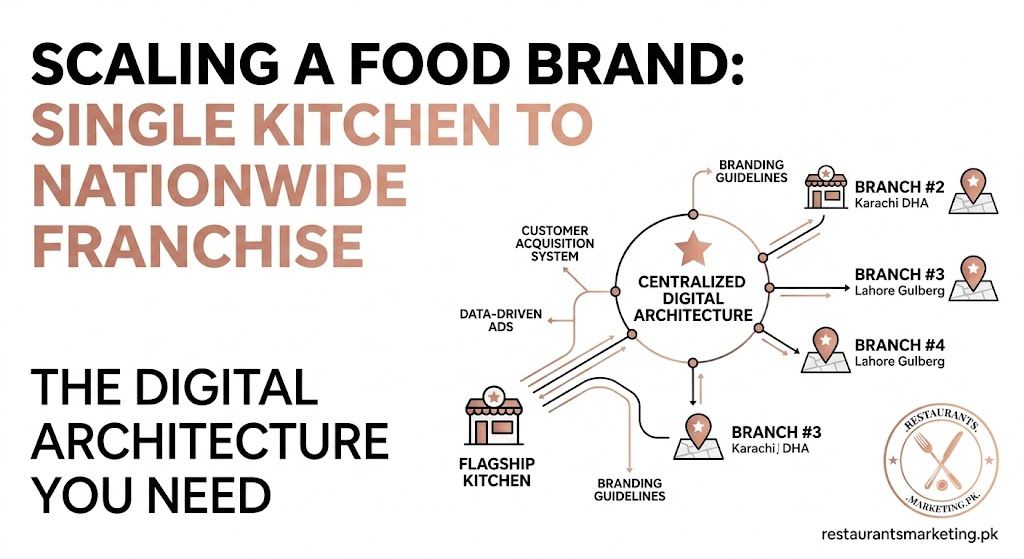
Every successful restaurant owner eventually hits a operational glass ceiling. Your flagship branch is constantly packed, kitchen throughput is running at peak capacity, and the nightly revenue statements look exceptional. However, replicating that single-station magic across a second, third, or tenth location is where most culinary entrepreneurs face severe friction. Moving from a single kitchen to a nationwide food brand is less of a culinary challenge and more of a digital infrastructure problem.
In Pakistan’s rapidly expanding hospitality ecosystem, scaling sustainably requires a rapid shift from personal operational oversight to centralized digital management. Relying purely on foot traffic or third-party aggregators to organically build your consumer base in a brand-new territory is a high-risk gamble. To expand successfully without bleeding capital, a restaurant group must establish a robust infrastructure that standardizes customer acquisition, customer data collection, and operational brand consistency across all active branches.
The Core Pitfalls of Unstructured Restaurant Expansion
Most home-grown food brands fail during their initial expansion phases because they attempt to manage multiple locations using single-location habits. When an owner can no longer physically stand in three different kitchens simultaneously to oversee ingredient quality and guest satisfaction, the entire business model relies on its underlying systems. Without a unified setup, a new branch in a different city or neighborhood can quickly feel like a completely detached business entity, actively diluting the brand equity you worked so hard to build.
A common industry mistake is assuming that hyper-local popularity automatically transfers over to a new market without proactive intervention. A restaurant brand that thrives in Gulberg, Lahore, might struggle significantly when opening a branch in DHA, Karachi, if the market entry strategy relies on the same localized word-of-mouth. True expansion requires a centralized conversion engine that drives business Growth for restaurants by treating each new branch as a predictable node in a larger network rather than an isolated, risky startup.
Centralized Infrastructure: The Foundation of Multi-Unit Success
To protect your profit margins and ensure predictable scaling across geographic borders, your brand must completely own its digital channels. Relying solely on third-party delivery networks means you are permanently renting your customer relationships. When you attempt to expand, those aggregate aggregator platforms control your organic visibility, restrict your consumer data, and claim up to 30% of your top-line revenue.
Direct Ordering Ecosystems
Building an independent digital sales channel is the most critical step in defending your expansion margins from day one. By routing your loyal customer base through a custom, high-converting Dedicated Website, you eliminate costly intermediary commissions and capture invaluable first-party data. This centralized digital hub allows operations to implement universal loyalty programs, track shifting consumer preferences across regions, and update menu items across all branches instantly.
Unified Brand Architecture
When a customer steps into your franchise location or orders online from a distant suburb, the visual identity, tone of voice, and overall sensory experience must remain completely identical to your original kitchen. Investing in professional, scalable Branding for restaurants establishes the operational guidelines, digital asset libraries, and emotional core that make your business instantly recognizable. This structural consistency builds consumer confidence, allowing a new branch to leverage the established trust of the flagship location from the very first hour of opening.
Data-Driven Customer Acquisition for New Locations
Launching a new branch requires an aggressive, data-driven approach to fill tables and generate immediate order volume. Waiting for organic discovery in a highly competitive market can drain your capital reserves long before the location becomes self-sustaining.
The most efficient scaling mechanism for multi-location food systems involves hyper-local audience targeting. By deploying geo-fenced, high-intent Paid Ads for business, you can target hungry consumers within a strict 3-to-5-kilometer radius of your new kitchen space. This ensures your marketing budget is spent exclusively on individuals who are geographically capable of dining in or ordering delivery, maximizing your return on ad spend and stabilizing the new branch’s cash flow during its critical opening phase.
Frequently Asked Questions
How do I maintain food quality across multiple restaurant franchises?
Standardize your supply chain by creating centralized base kitchens, using precise ingredient specification sheets, and utilizing automated inventory tracking systems to ensure absolute flavor consistency across all locations.
Is it better to scale via cloud kitchens or traditional dine-in branches?
Cloud kitchens offer lower overhead costs and faster deployment for delivery-focused food brands, while dine-in locations build stronger long-term brand equity and community trust.
How do I handle multi-location menu management efficiently?
Utilize a centralized point-of-sale system that syncs directly with your web platform to update real-time pricing, mark out-of-stock items, and push promotions globally.
What is the best way to handle restaurant customer data when scaling?
Collect data through proprietary digital ordering systems and customized Wi-Fi login portals, storing it in a unified database to run automated retention campaigns.
How far apart should my restaurant branches be located to avoid cannibalization?
Analyze historical delivery radiuses and demographic data to ensure each location serves a distinct population pocket, typically separated by at least 5 to 8 kilometers.
Should each restaurant franchise have its own social media pages?
Maintain a single master brand page for a cohesive identity, but use localized ad campaigns and geo-targeted search listings to address specific branch audiences.
What is the biggest hidden cost when expanding a food brand?
The hidden drain is often supply chain fragmentation and administrative overhead caused by manual inventory tracking and unoptimized local regional logistics.
How do I attract qualified franchisees for my restaurant brand?
Demonstrate a highly profitable corporate location backed by a turnkey digital infrastructure, standardized operating manuals, and a predictable customer acquisition model.
When is a restaurant legally and financially ready to franchise?
You are ready when your flagship location has operated profitably for at least two years with documented processes that run completely independent of the founder.
How do I combat third-party delivery apps eating into franchise profits?
Shift your audience to a proprietary ordering platform by offering exclusive online menu items, direct loyalty rewards, and better pricing for direct orders
Leave feedback about this